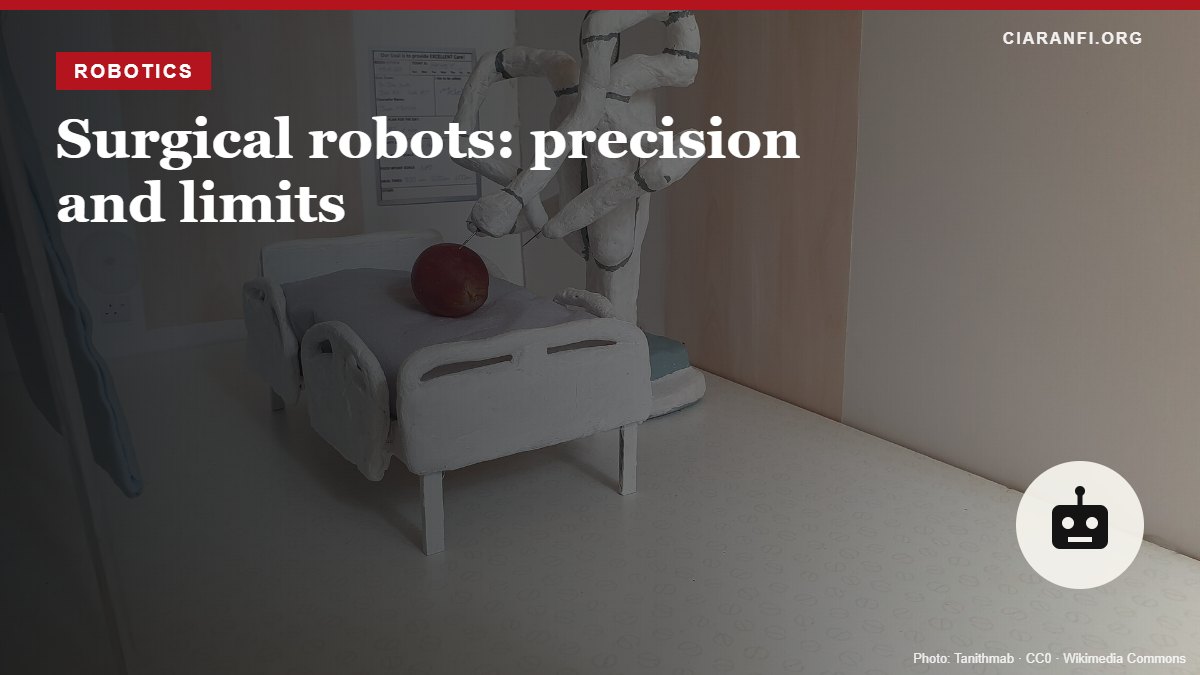
Surgical robots are tools that assist the surgeon; they don’t replace them. The surgeon controls the instruments from a console, while the robot translates their movements into steadier, more precise and scaled-down gestures. In some procedures, such as prostatectomy and other urological surgery, they are now widespread. The clinical decision, meaning what to do and when, always stays with the doctor, and responsibility for the operation doesn’t change.
How it works
The system consists of a console, where the surgeon sits and views a three-dimensional image of the surgical field, and robotic arms that carry instruments and a camera into the body through small incisions. The robot filters out involuntary hand tremor, scales movements and allows work in tight spaces at angles the human hand would struggle to reach.
Documented benefits
- Smaller incisions: in certain procedures they can reduce post-operative pain and the risk of some complications.
- Greater control in tight spaces: useful in the pelvis or other complex anatomical areas.
- Steadier movements: the system reduces tremor and makes gestures more regular.
These benefits depend on the type of procedure and on the team’s experience. Not every case benefits, and for some, traditional open or laparoscopic surgery remains the better choice.
The limits
The equipment is expensive and needs specialised maintenance. The surgeon must complete specific training, because operating from a console has a learning curve. The system doesn’t feel tissue the way a hand does, so tactile feedback is limited, although some models are improving on this. And a failure during surgery requires a plan for switching to conventional surgery.
Who decides
The clinical decision is always human: the doctor assesses whether the robot is appropriate, plans the operation, manages complications and is accountable for the outcome. The robot carries out movements guided by the surgeon; it doesn’t choose on its own. Informed consent rules apply as for any other procedure, and the patient must understand what is being used and what the risks are.
Safety and regulation
Robotic surgical systems are certified medical devices subject to strict controls. Hospitals must ensure training, maintenance and safety protocols. Data such as surgical video and patient information must be protected like any other health data.
A balanced picture
Surgical robots are a useful technology in some fields, with real benefits but also costs and limits. Anyone weighing them up, as a patient or a professional, should ask which procedure is being proposed, what alternatives exist and how experienced the team is. The answer always depends on the individual case.